Credit Cards for Bad Credit: Complete Guide to Rebuilding Your Credit Score
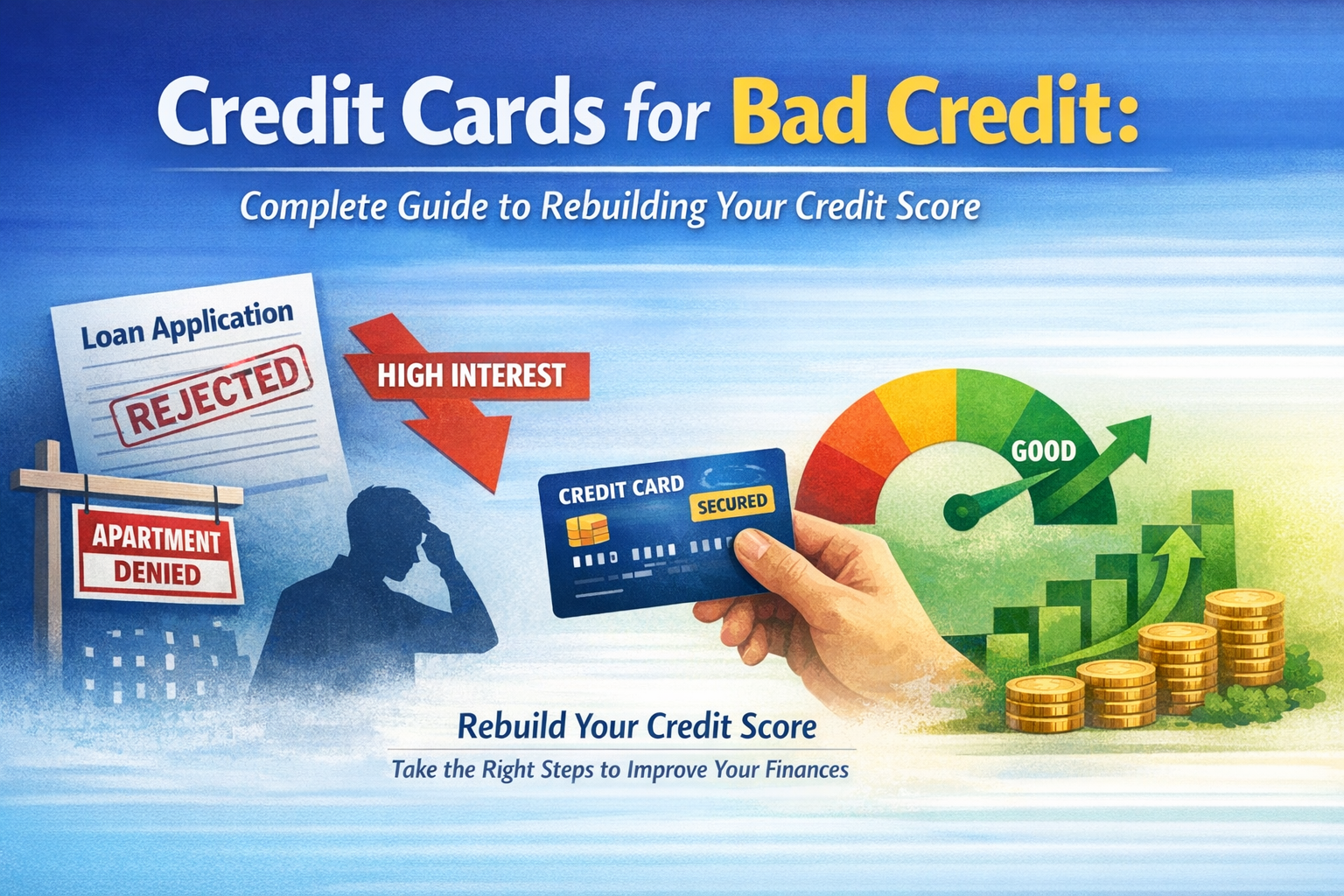
Bad credit can make life difficult.
Loan applications get rejected.
Interest rates go higher.
Even renting an apartment becomes harder.
But bad credit is not permanent.
It reflects past financial mistakes or difficult situations. With the right steps, you can rebuild your credit score. One of the most effective tools for this is a credit card designed specifically for bad credit.
This guide explains how these cards work, how to choose one, and how to use it properly.
What Does Bad Credit Mean?
Credit scores usually range from 300 to 850.
If your score is below 580, lenders consider it poor. This can happen because of:
- Late payments
- High credit balances
- Collections
- Defaults
- Too many credit applications
Banks see low scores as risky. That is why regular rewards credit cards often reject applicants with bad credit.
However, special credit cards are designed for rebuilding.
Why Credit Cards for Bad Credit Exist
Banks reduce their risk in two main ways:
- By asking for a refundable security deposit
- By charging higher interest or fees
Because their risk is controlled, they are more willing to approve applicants with low credit scores.
These cards are not luxury products.
They are rebuilding tools.
Secured Credit Cards Explained
A secured credit card requires you to deposit money upfront.
For example, if you deposit $300, your credit limit will usually be $300.
The deposit protects the bank if you fail to pay.
This makes approval much easier.
Benefits of Secured Cards
- Higher approval chances
- Reports to credit bureaus
- Helps rebuild payment history
- Refundable deposit
- Possible upgrade later
For most people starting over, secured cards are the safest option.
Unsecured Credit Cards for Bad Credit
Unsecured cards do not require a deposit.
However, they usually come with:
- Higher interest rates
- Annual fees
- Lower credit limits
They can still help rebuild credit. But you must read the terms carefully.
If you cannot afford a deposit, an unsecured card may be your only option.
How These Cards Improve Your Credit
Simply having the card does not improve your score.
Your behavior matters.
Your credit score increases when you:
- Pay on time
- Keep balances low
- Avoid multiple applications
- Keep the account open
Consistently paying bills on time contributes more to your score than any other factor.
One late payment can slow your progress significantly.
The 30 Percent Utilization Rule
Credit utilization means how much of your credit limit you are using.
If your limit is $300 and you spend $250, that looks risky.
Try to keep your balance under 30 percent of your limit.
Even better, stay under 10 percent if possible.
Example:
Limit = $300
Safe usage = Under $90
Lower balances signal responsible behavior to lenders.
Smart Strategy for Rebuilding Credit
Use your card for small, planned expenses only.
For example:
- Gas
- A streaming subscription
- A small grocery purchase
- A phone bill
Then pay the full balance before the due date.
Do not carry unnecessary debt.
Interest charges can grow quickly, especially with higher APRs common on rebuilding cards.
The goal is to show responsible usage, not to borrow money long term.
How Long Does It Take to See Results?
Credit rebuilding takes time.
In the first 3 months, you may not notice much change.
After 4 to 6 months of on-time payments, small improvements usually appear.
After 6 to 12 months of perfect history, the difference can become significant.
Consistency is the key.
Missing one payment can undo months of progress.
Choosing the Right Card
Before applying, check these factors:
- Does the card report to all major credit bureaus?
- Is the deposit refundable?
- Are the annual fees reasonable?
- Is there a chance to upgrade later?
Apply for only one card.
Multiple applications create hard inquiries, which can reduce your score further.
Common Mistakes to Avoid
Many people make errors during rebuilding.
Avoid these:
- Missing even one payment
- Using the full credit limit
- Applying for multiple cards at once
- Closing the card too early
- Ignoring the fee structure
Rebuilding credit requires patience and discipline.
When Can You Upgrade?
After 6 to 12 months of responsible use, some lenders may:
- Increase your credit limit
- Upgrade you to an unsecured card
- Refund your security deposit
At that stage, you may also qualify for better financial products with lower interest rates.
Why Rebuilding Cards Are a Smart Choice for Credit Recovery
Yes, if your goal is rebuilding your credit.
No, if you expect high rewards or luxury benefits.
These cards are stepping stones.
Improving your credit score can help you:
- Get approved for loans
- Secure lower interest rates
- Qualify for better credit cards
- Improve overall financial flexibility
That long-term benefit makes them valuable.
Final Thoughts
Rebuilding your credit is a journey, not a sprint. Many people with bad credit feel discouraged because they see rejection after rejection. But it’s important to remember that a low score reflects past financial challenges, not your ability to improve. With the right strategy and discipline, you can gradually restore your financial health.
The key is to start with one responsible credit card. Secured cards are usually the safest option, but if you cannot provide a deposit, an unsecured card that reports to all credit bureaus can also work. Use the card only for small, planned purchases, such as a monthly subscription, a grocery bill, or gas. Then, always pay the full balance on time. This shows lenders and credit bureaus that you are managing your debt responsibly.
Keep your credit utilization low. It’s best to spend no more than 30% of the credit available to you. Staying below this threshold signals to lenders that you are not overextended, which can accelerate the improvement of your credit score. Avoid applying for multiple cards at once, as each hard inquiry can temporarily lower your score.
Patience is essential. Most people start seeing improvements within three to six months, with more noticeable progress after six to twelve months of consistent on-time payments. Remember, rebuilding credit is about long-term habits, not quick fixes. Celebrate small milestones along the way, and stay committed to responsible spending and repayment.
For more tips on rebuilding your credit, you can visit Credit Karma for free guides and tools to monitor your progress. Following these steps carefully will put you on the path to better financial stability and open doors to more favorable loans, credit cards, and financial opportunities in the future.